

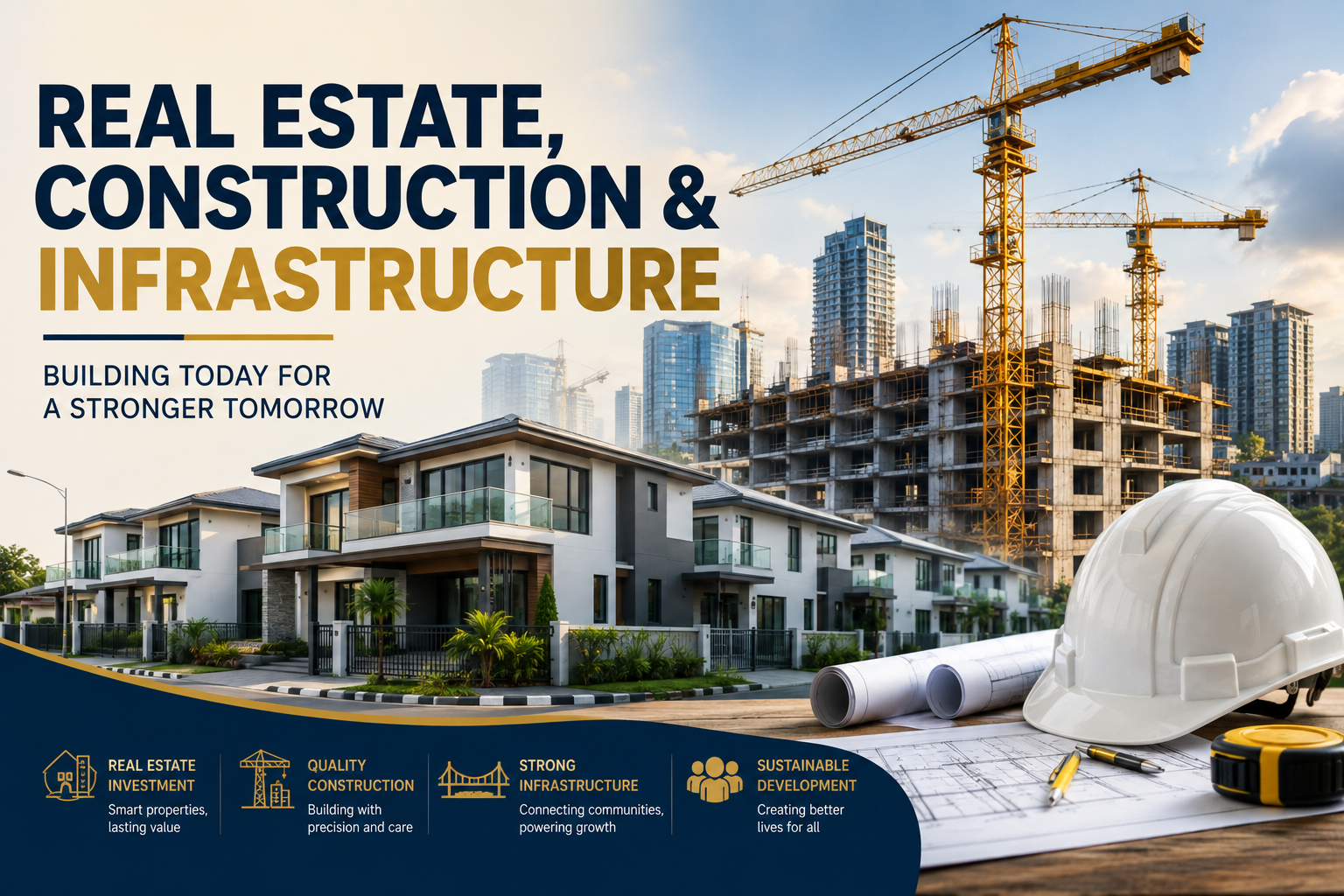
Ghana continues to attract interest from members of the diaspora looking to buy land, build homes, develop rental properties, start businesses or develop real estate projects.
For many people living abroad, building or developing projects in Ghana is more than a financial decision. It can also represent a connection to home, preparation for retirement, support for family or an opportunity to participate in Ghana’s growing economy.
The opportunities are real, but so are the risks.
Successful projects require more than sending money and finding someone locally to manage the project. Verification, planning, documentation and consistent supervision can make the difference between a successful project and an expensive problem.
Why Ghana Continues to Attract Diaspora Property Projects
Ghana has several characteristics that make property and construction attractive to diaspora property owners and entrepreneurs.
Urban expansion continues in Accra and other growing areas, while demand exists across different segments of the property market — from residential housing and furnished accommodation to commercial spaces and development projects.
Diaspora members are also increasingly looking beyond central Accra toward developing communities where land and property may still be more accessible.
This creates opportunities in areas such as:
- Residential construction
- Rental properties
- Furnished apartments
- Commercial properties
- Land development
- Property renovation
- Warehousing and industrial spaces
- Hospitality projects
- Construction-related businesses
But identifying an opportunity is only the beginning.
Land Verification Should Come Before Construction
One of the most important stages of any property project in Ghana happens before the first block is laid.
Land ownership and documentation must be properly investigated.
An attractive piece of land at a good price does not automatically mean it is a sound project.
Before purchasing land, buyers should understand who is selling it, what legal interest the seller holds, whether there are competing claims and whether the relevant documentation can be verified.
A diaspora buyer should avoid relying entirely on photographs, verbal assurances or personal relationships.
Professional due diligence can be worth far more than the cost of correcting a land problem later.
Construction Creates Opportunity — and Requires Supervision
Building from abroad presents another challenge.
A project can begin with a clear budget and construction plan, but costs, materials and timelines can change quickly without proper oversight.
Someone needs to know what is actually happening on the site.
Questions worth asking include:
- Has the work being paid for actually been completed?
- Are the correct materials being used?
- Does construction follow the agreed specifications?
- Are purchases properly documented?
- Is the project progressing according to schedule?
- Are unexpected costs justified?
Regular site inspections, photographs, videos, progress reports and expense documentation can give a client abroad a much clearer picture of the project.
Understand the Real Cost of Building
One common mistake is focusing only on the price of land and basic construction.
A realistic project budget may also need to consider professional services, permits, site preparation, utilities, security, drainage, finishing, transportation and unexpected costs.
Changes during construction can also increase the final cost considerably.
A project should therefore begin with a realistic budget and include a contingency for legitimate unexpected expenses.
Choosing the Right People Matters
A strong project requires more than capital.
It requires reliable people.
Depending on the size of the development, this could include architects, engineers, quantity surveyors, contractors, tradespeople, lawyers, property managers and other professionals.
Before appointing a contractor or service provider, clients should consider verifying:
Identity → Experience → Previous projects → References → Business information → Written quotation → Scope of work
Price should not be the only deciding factor.
The cheapest quotation can become expensive if poor workmanship needs to be corrected later.
Don’t Send Money Without Clear Milestones
For diaspora project owners, transferring large amounts of money before work has been completed can create unnecessary exposure.
Where appropriate, construction payments can be connected to clearly defined project milestones.
For example:
Site preparation → Foundation → Structural works → Roofing → Electrical & plumbing → Finishing → Completion
The exact stages will depend on the project, but the principle is important: know what you are paying for and verify progress.
Good documentation also creates accountability between the client and the people managing the project locally.
Real Estate Is More Than Building Houses
The opportunity in Ghana’s property sector extends beyond purchasing land and constructing a personal home.
Entrepreneurs can explore businesses connected to the wider property and infrastructure ecosystem.
These may include:
- Property management
- Construction materials
- Equipment and tool rental
- Warehousing
- Facility management
- Renovation services
- Building technology
- Property maintenance
- Student accommodation
- Short- and long-term rentals
- Commercial development
As Ghana’s cities and communities expand, businesses supporting that growth may also find opportunities.
Think About the Property After Construction
A property strategy should answer an important question:
What happens when construction is finished?
If the property is intended to generate income, owners should consider who will manage it, maintain it, find tenants, collect rent and provide regular reports.
A beautiful building without a management strategy can quickly become an underperforming property.
Property management should therefore be considered during the planning stage rather than after construction.
The Diaspora Advantage
Members of the diaspora can bring capital, international experience, professional networks and exposure to different approaches to property development.
At the same time, being abroad creates distance between the owner and the project.
That distance makes local verification, transparency and independent project monitoring particularly important.
The goal should not simply be to start a project in Ghana.
The goal should be to invest with the right information, the right people and the right systems in place.
Opportunity With the Right Approach
Ghana’s real estate, construction and infrastructure sectors can offer meaningful opportunities for the diaspora.
But enthusiasm should always be supported by proper due diligence.
Verify before buying.
Plan before building.
Document before paying.
Monitor during construction.
And think about management before the project is completed.
With the right preparation and reliable support on the ground, diaspora members can participate in Ghana’s development while building projects designed for long-term value.
Planning a Property or Construction Project in Ghana?
If you are considering buying property, building, renovating, verifying a business or project, or you simply want to discuss an opportunity in Ghana or West Africa, BOWEST AFRICA can help you connect with reliable support on the ground. CONTACT US.
